

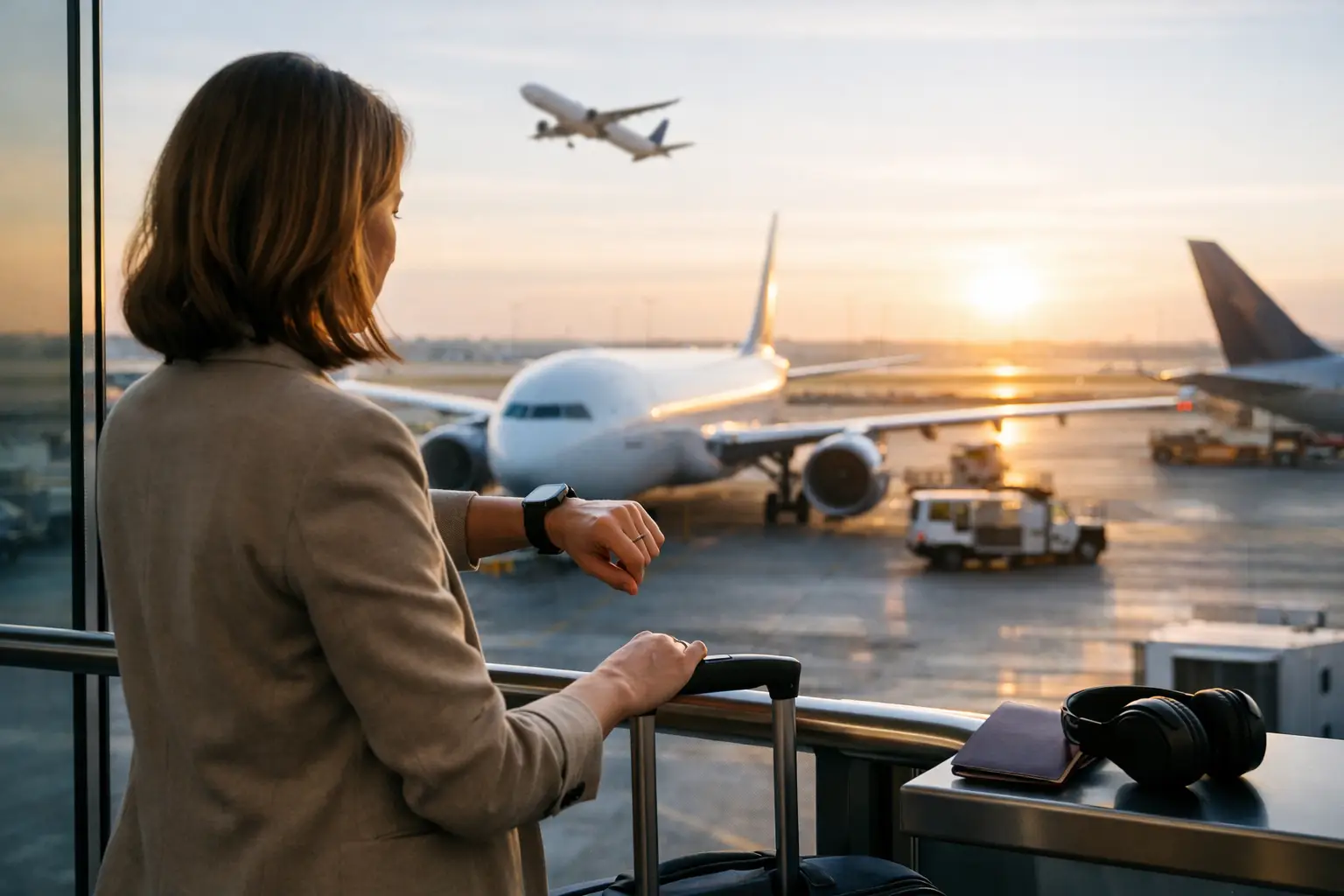
Missing a flight rarely comes down to one big mistake. More often, it is a series of small delays – leaving home a bit late, getting stuck in traffic, joining the wrong queue, repacking hand luggage at security, then realising the gate is a long walk away. The best ways to avoid airport delays are usually simple, but they only work when planned early.
For most travellers, the aim is not just reaching the airport. It is arriving calm, checked in, and with enough time to handle the parts of travel that are outside your control. Some delays begin on the road, others at the terminal, and a few start the night before when details are left until the last minute. A smoother journey comes from reducing those pressure points one by one.
Best ways to avoid airport delays before you leave home
The first decision that affects everything else is when you leave. Many people plan around the flight time, when they should really plan around the airport process. A 10am departure does not mean a 7.30am departure from home will always do the job. It depends on the airport, terminal, time of day, whether you are checking bags, and how far you are travelling.
If you are heading to a major airport such as Heathrow or Gatwick from outside London, build in proper road time rather than optimistic road time. Morning congestion, roadworks and peak travel periods can change a straightforward journey quickly. A sensible buffer is not wasted time. It is what protects the rest of your schedule.
It also helps to prepare every document the evening before. Keep passports, boarding passes, booking confirmations and any travel requirements together in one place. If you are travelling as a family, check every passport individually rather than assuming they are all packed and valid. Those last-minute searches at the front door are a common cause of self-inflicted delay.
Packing deserves the same attention. Security hold-ups often begin with avoidable items in hand luggage. Liquids packed incorrectly, sharp items left in the wrong bag, and electronics buried under clothing can all slow you down. If you know your cabin bag is compliant before you leave, you remove one of the most common terminal bottlenecks.
Timing matters more than most people think
Travellers often ask how early is early enough. The honest answer is that it depends. A solo traveller with no hold luggage on a quiet midweek departure will move differently from a family of five flying during school holidays. International flights usually need a larger margin, and some terminals simply take longer to navigate than others.
A good rule is to work backwards from the point you want to be through security, not from the departure time on your ticket. Then add a margin for the road journey. If everything runs smoothly, you will have time for a coffee rather than a sprint. If something goes wrong, that extra time becomes essential.
Business travellers sometimes cut it fine because they travel often and know the routine. That confidence can help, but it can also lead to underestimating one slow queue or one unexpected lane closure on the approach roads. Frequent flying reduces uncertainty, but it does not remove it.
Book airport transport that reduces uncertainty
One of the best ways to avoid airport delays is to remove as many moving parts as possible from the journey to the terminal. When your transport is pre-booked, timed properly and suited to your luggage and group size, the whole start of the trip becomes more predictable.
This is especially useful for early departures, late-night arrivals, family travel and longer journeys to airports serving London and the wider UK corridor. A fixed-fare airport transfer gives you clarity before the day begins. You know who is collecting you, when they are due, and what vehicle is arriving. That matters when timing is tight.
There is also a practical advantage in choosing a service that monitors flights for pick-ups. If your inbound flight lands late, your ground transport can adjust around the actual arrival time rather than the original schedule. That does not stop the airline delay, but it can prevent the second delay that happens when onward travel falls apart.
For travellers going to Heathrow from places such as Watford, St Albans, Milton Keynes or Cambridge, or making longer trips between Gatwick and surrounding areas, road planning becomes even more important. The longer the route, the less sense it makes to leave timing to chance.
Check in as early as you can
Online check-in is one of the easiest time-savers available, yet plenty of travellers still leave it too late. Check in as soon as your airline allows, confirm your seat, review baggage allowances and make sure your boarding pass is accessible on your phone or printed if needed.
This is also the right moment to verify the terminal. It sounds basic, but airports with multiple terminals can catch people out, particularly when they are booked in a rush or travelling for work. Going to the wrong terminal can turn a manageable morning into a very expensive problem.
If you do need to check luggage, make sure the bags meet the airline’s size and weight rules before you set off. Repacking at the bag drop area is stressful and slow, and it creates delays not just for you but for everyone behind you.
Move through security faster by packing for the airport, not just the trip
A well-packed suitcase helps at your destination. A well-packed cabin bag helps at the airport. Those are not always the same thing.
Keep liquids easy to reach and within the required limits. Place laptops and larger electronics where they can be removed quickly if asked. Empty bottles, loose coins and bulky jackets can all slow you down at the tray line if you have not thought ahead. Shoes that are quick to remove, where appropriate, are another small choice that can save time.
There is a trade-off here. Overpacking your hand luggage to avoid checked bag fees may sound efficient, but it often makes the airport process slower and more awkward. If your bag is too heavy, too full or difficult to organise, you may lose the time you thought you were saving.
Pay attention to live updates, but do not overreact
Flight apps, airline notifications and airport updates are useful, but they need to be read carefully. A gate not yet shown is normal. A slight change in departure time may not affect boarding. Constantly refreshing updates can create unnecessary stress if you treat every change as a crisis.
The smart approach is to monitor key points: departure time, terminal, gate announcement and any major disruption affecting your route to the airport. If there is a serious issue on the roads, leaving earlier or adjusting pick-up timing can make a real difference. If there is only a minor airline update, the best response may simply be to continue as planned.
Travelling with children or in a group needs extra margin
Families and group bookings often face delays that solo travellers do not. One child needs the loo just as you are leaving. Someone cannot find a passport. Pushchairs, car seats and extra bags take longer to load and unload. None of this is unusual, which is exactly why extra time matters.
The same applies to larger luggage loads. Ski cases, golf clubs, baby equipment and multiple suitcases all make kerbside drop-off and check-in slower. Booking the right vehicle size is not only about comfort. It helps prevent awkward delays before the journey has properly started.
Keep your airport routine consistent
The best travellers are not always the fastest. They are usually the most consistent. They know where their documents go, what stays in hand luggage, how early they like to arrive, and how they get to the airport without unnecessary guesswork.
That consistency is especially helpful if you travel regularly for work. A repeatable routine lowers the risk of small errors. It also makes it easier to spot the parts of your journey that need improvement, whether that is leaving earlier, packing lighter or booking more dependable transport.
If reliability matters to you, the strongest plan is a simple one: prepare the night before, leave with time in hand, check in early, pack with security in mind and choose airport transport that is built around punctuality. Travel will never be completely free of delays, but it can be far less vulnerable to them. A calm start usually leads to a better journey, and that is worth planning for.