

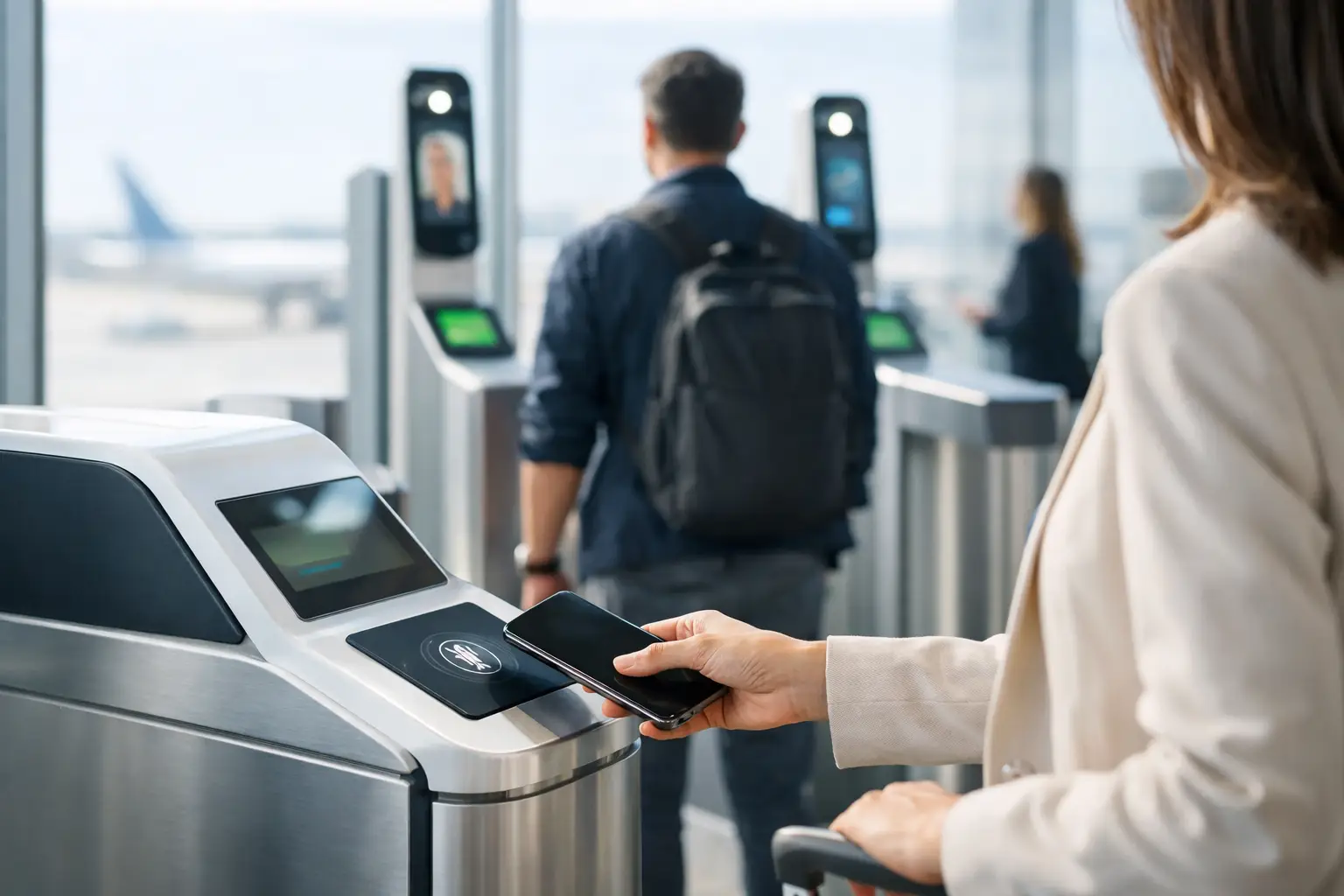
A 06:00 departure is rarely stressful because of the flight itself. It is stressful because every small uncertainty arrives at once: whether your documents are ready, where you will be dropped off, how much luggage you can manage, and whether a delay will affect your ride home. Contactless airport travel reduces those pressure points by replacing queues, paperwork and last-minute decisions with information that is ready when you need it.
For most travellers, the goal is not to avoid every conversation. It is to make the journey more controlled, quicker to manage and less dependent on finding help at the last minute. A digital boarding pass, a properly prepared bag and a pre-booked private transfer can make a meaningful difference, particularly when travelling with children, carrying several cases or working to a tight schedule.
What contactless airport travel really means
Contactless airport travel is a joined-up way of travelling that uses digital tools and pre-arranged services wherever possible. That may include checking in through an airline app, storing travel documents securely on your mobile, using electronic payment and arranging your airport transfer before the day of travel.
It does not mean that every part of your journey will be completely hands-free or that airport staff are unavailable. Security procedures, baggage rules and border checks still apply, and some airlines or destinations may require physical documents. The value lies in removing avoidable friction, not in assuming technology replaces every stage of the process.
The best approach is to keep the essentials accessible in more than one form. Save your boarding pass to your mobile wallet, but carry a printed copy if you are concerned about battery life or unreliable mobile signal. Check destination-specific entry requirements before leaving home, especially when passports, visas or health documentation are involved.
Start with a pre-booked journey to the terminal
The first part of the airport experience can set the tone for the whole day. A pre-booked, door-to-door private transfer gives you a confirmed collection time, a vehicle suited to your party and luggage, and a fare agreed in advance. There is no need to make transport decisions while watching the clock or handling cases outside.
For contactless travel, booking ahead also means you can provide the important details early. Give the collection address, flight number, departure terminal, number of passengers and realistic luggage information. A family of four with pushchairs and large holiday cases needs a different vehicle from a solo traveller with hand luggage. Choosing correctly at the booking stage avoids an uncomfortable or impractical start.
A reliable provider should make the process clear rather than complicated. With MR Transfers, passengers can arrange a fixed-fare airport journey in advance and choose from vehicle options including saloons, estates, executive cars and larger MPVs. For a Heathrow or Gatwick trip, that certainty is particularly useful when traffic conditions and terminal layouts can add time to a journey.
Build in time for the parts you cannot control
Digital check-in can save time, but it cannot remove roadworks, weather, security queues or an unexpectedly busy terminal. Plan your collection time around the airline’s recommended arrival window, then allow extra margin for luggage, young children, reduced mobility needs and peak travel periods.
For early departures, confirm your booking details the day before and keep your mobile charged overnight. For return journeys, enter the flight number accurately. Flight monitoring helps a pre-booked driver respond to revised arrival times, which is more reassuring than trying to arrange onward travel after landing.
Make your mobile useful, not essential
A mobile phone is at the centre of many contactless airport journeys, but it should support your plan rather than become a single point of failure. Before setting off, download the airline app, check that you can open your boarding pass without a data connection and take screenshots of your booking references and terminal details.
A portable charger is worthwhile, especially on a long day involving connections. Keep it in your hand luggage with the correct cable. If you use a digital wallet, check that your preferred payment card is active and that you know your PIN in case a payment terminal asks for it.
It is also sensible to share key travel details with one trusted person. Send them your flight number, departure time and transfer information. This is not only useful for families meeting at different locations. It provides a straightforward backup if your mobile is lost, damaged or out of charge.
Keep documents organised in one place
Do not search through emails at the terminal entrance. Create a simple travel folder on your mobile containing your passport details, boarding pass, accommodation confirmation, transfer booking and travel insurance information. Name files clearly so they are easy to find under pressure.
Physical documents still deserve a place in your hand luggage. Passports, medication, chargers and valuables should not go into a checked case. If you are travelling as a group, one adult can hold shared confirmations, but each traveller should know where their own passport and boarding pass are kept.
Prepare luggage for quicker decisions at security
Contactless travel works best when your luggage is organised before you arrive. Check your airline’s size and weight allowance, then weigh larger cases at home if possible. Excess baggage decisions at the airport are rarely quick or inexpensive.
Use a small, easy-to-reach pouch for liquids and any items you may need to remove during screening. Rules can differ by airport and route, so check the latest guidance rather than relying on what was accepted on a previous trip. Electronics, medication and baby supplies should be packed so you can reach them without unpacking an entire bag.
For families, give each child a small bag with comfort items, headphones and a drink bottle where permitted. It keeps the main luggage easier to manage and reduces the chance of searching for essentials while moving through the terminal.
Use contactless payment thoughtfully
Digital payment is convenient for parking, food, purchases and other travel costs, but it is wise to have a backup card and a small amount of local currency where appropriate. Payment limits, connectivity problems and declined transactions can happen at inconvenient moments.
Review your card’s overseas usage settings before an international trip. Some banks may pause a transaction that appears unusual, and resolving it while boarding is being called is avoidable stress. Keep receipts for larger travel purchases until you have completed the journey, particularly when expenses need to be claimed later.
For corporate travellers, a fixed transfer fare can make expense management simpler. You know the cost before departure and have a clear record of the booking, rather than relying on a variable amount at the end of a long day.
Arriving home without the usual uncertainty
The return leg is where pre-planning often proves its value. After a flight, passengers may be tired, delayed, travelling with children or dealing with extra shopping and checked luggage. Having a confirmed collection arrangement means you can focus on passport control and baggage reclaim rather than comparing options after landing.
Check the meeting instructions before you travel. Airports have designated collection points, and these can vary by terminal. Once you have collected your luggage, switch your mobile on, check messages and follow the agreed process. If your flight lands early or late, flight tracking gives the driver useful context, but communication remains helpful if your circumstances change.
A calmer way to travel starts before departure
The strongest contactless journey is not built on one app or one piece of technology. It comes from having the right details ready, choosing transport that fits your needs and allowing enough time for the parts of travel that cannot be rushed. When your airport transfer, documents and luggage plan are settled before you close the front door, the terminal becomes the next step in your journey rather than the start of a problem.